Building a Book Recommendation System
Business Scenario
The project is designed to recommend books to users based on their preferences. It uses data scraped from free scraping website Books to Scrape and provides personalized recommendations through a web-based interface. This project integrates data scraping, preprocessing, machine learning, and a user-friendly interface to deliver a complete book recommendation solution, which could be used in e-commerce platforms, libraries, or book-related applications to enhance user experience and drive engagement.
Techniques
- Web Scraping: Libraries like
beautifulsoup4,selenium, andscrapyare used to scrape book data (e.g., titles, prices, ratings, descriptions) from websites. - Data Preprocessing:
pandasis used for data cleaning and transformation (e.g., cleansing prices, extracting stock numbers, mapping ratings). Regular expressions (re) are used to clean text and extract specific patterns. - Recommendation Engine:
scikit-learnis used to implement a content-based recommendation system using TF-IDF vectorization and cosine similarity to find books similar to a user’s query. - Interactive User Interface:
streamlitlibrary is used to create a web-based UI for users to interact with the system, input queries, and view recommendations.
Workflow
1. Data Collection
- Scrape book data using one of three methods:
beautifulsoup4,selenium, orscrapy.
2. Data Preprocessing
- The scraped data is cleaned and transformed (e.g., removing special characters, converting prices, mapping ratings).
3. Building Recommendation System
- The system uses TF-IDF vectorization to analyze book titles or descriptions and computes cosine similarity to recommend books similar to the user’s query.
4. Model Deploying
- A web-based interface built with
streamlitallow users to interact with the system to get personalized book recommendations based on text input or filter data.
Functionalities
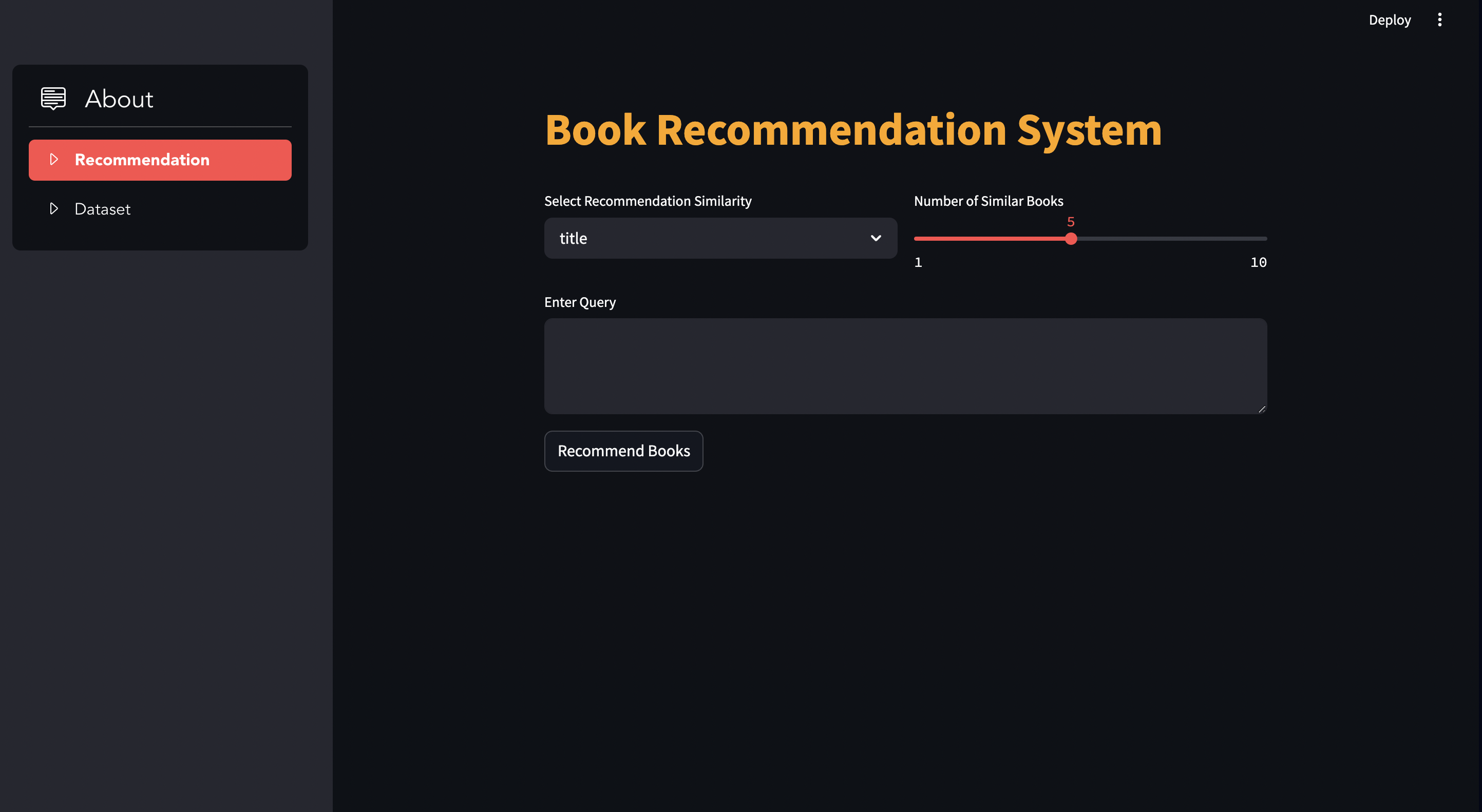
- Get book recommendations by similar title or description
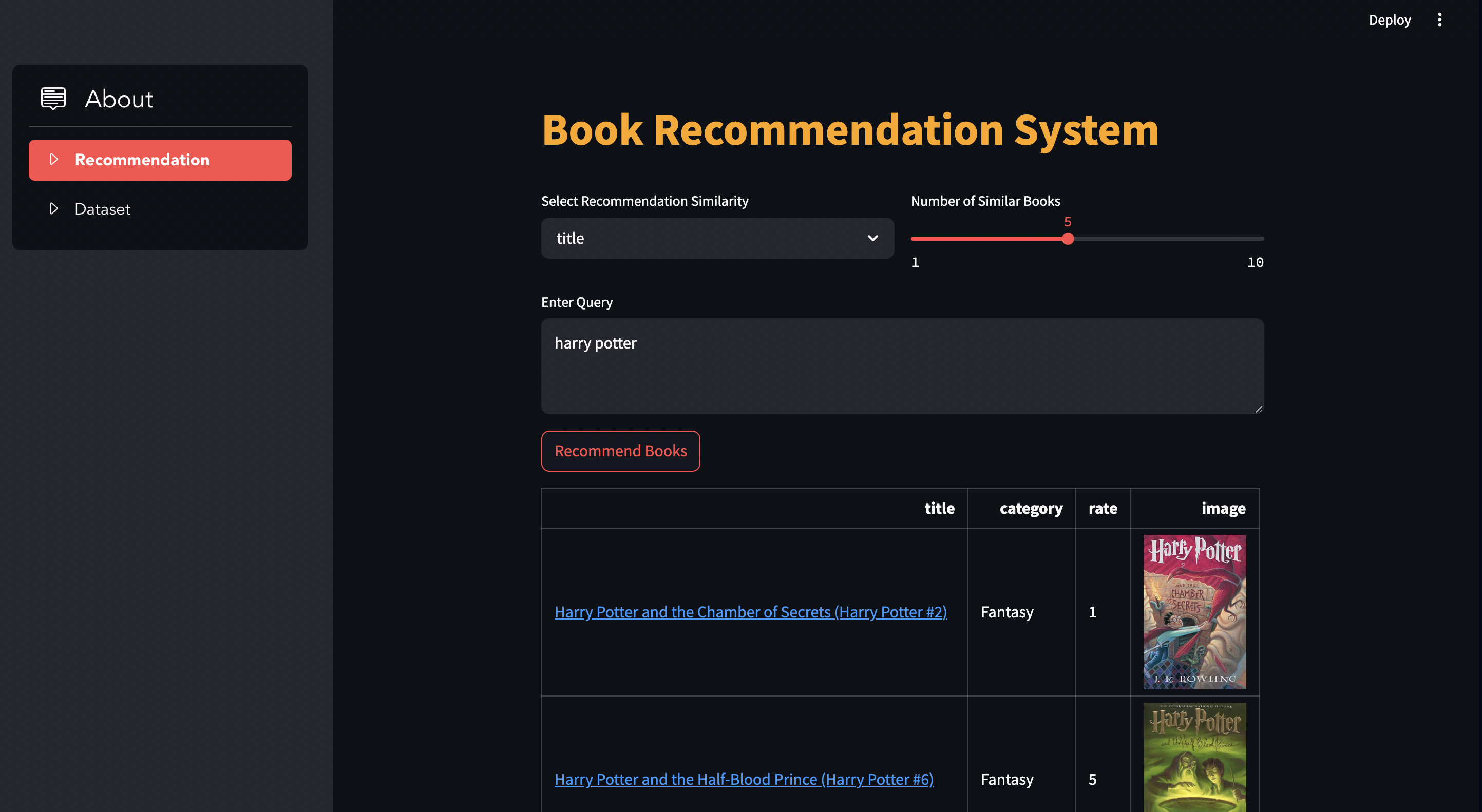
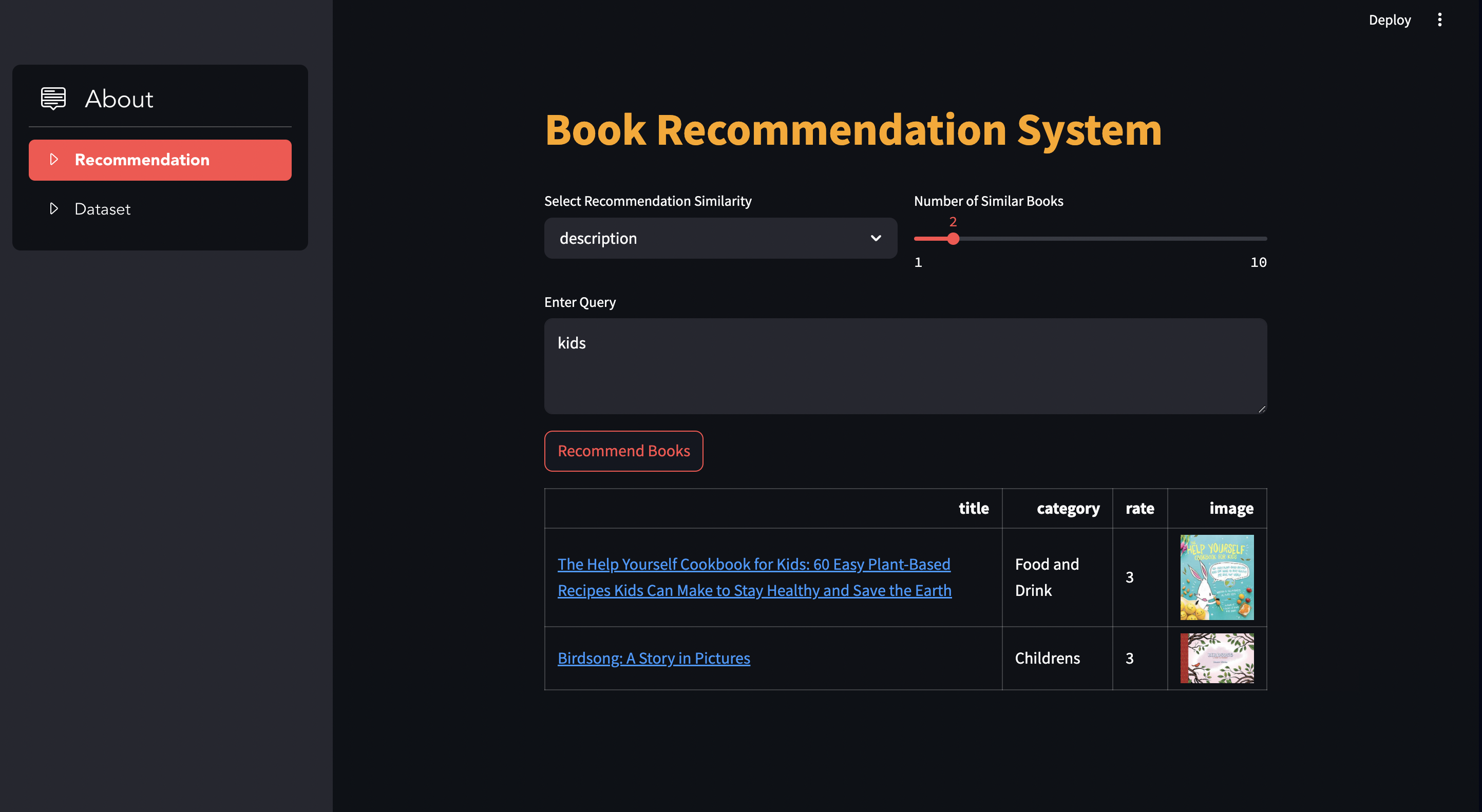
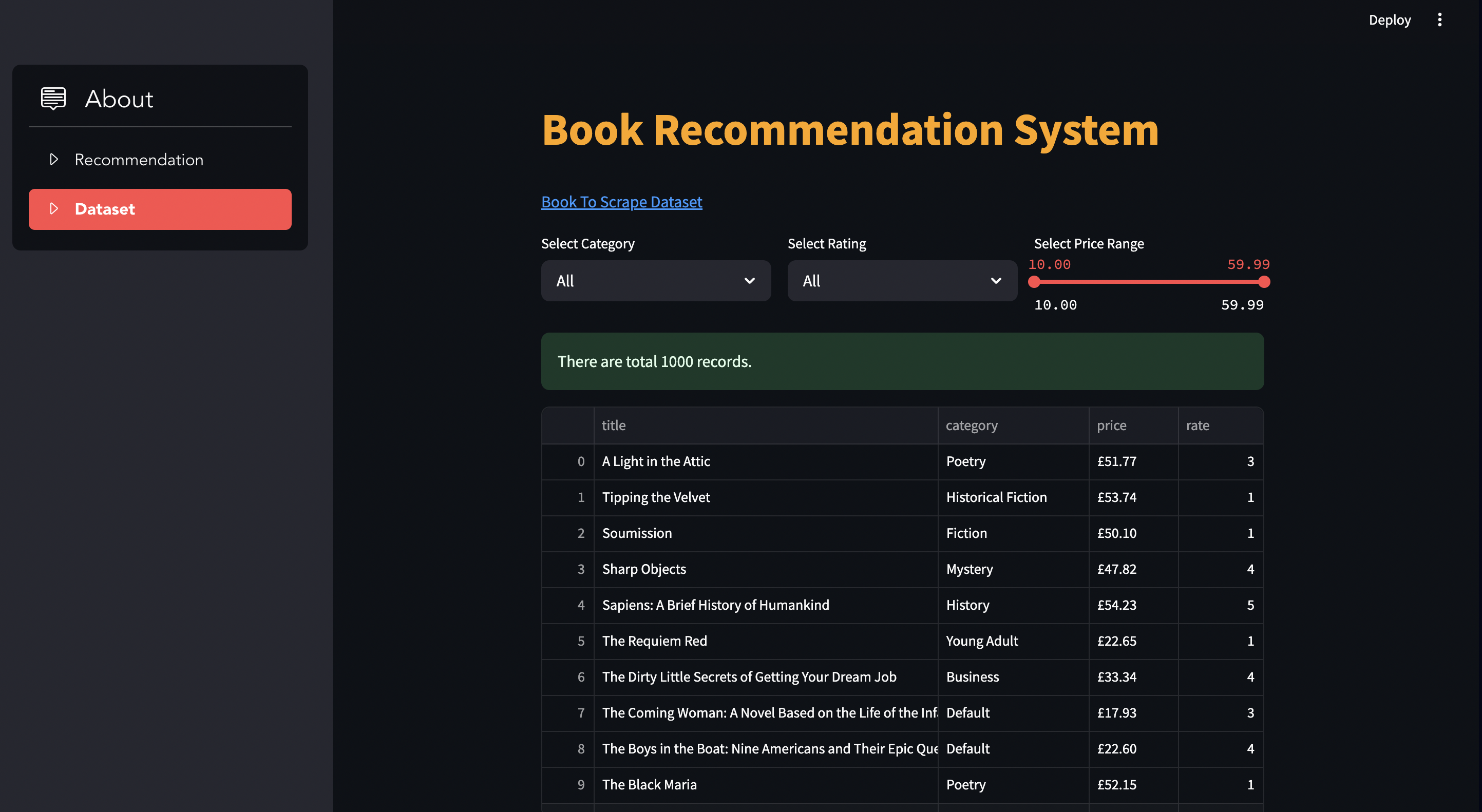
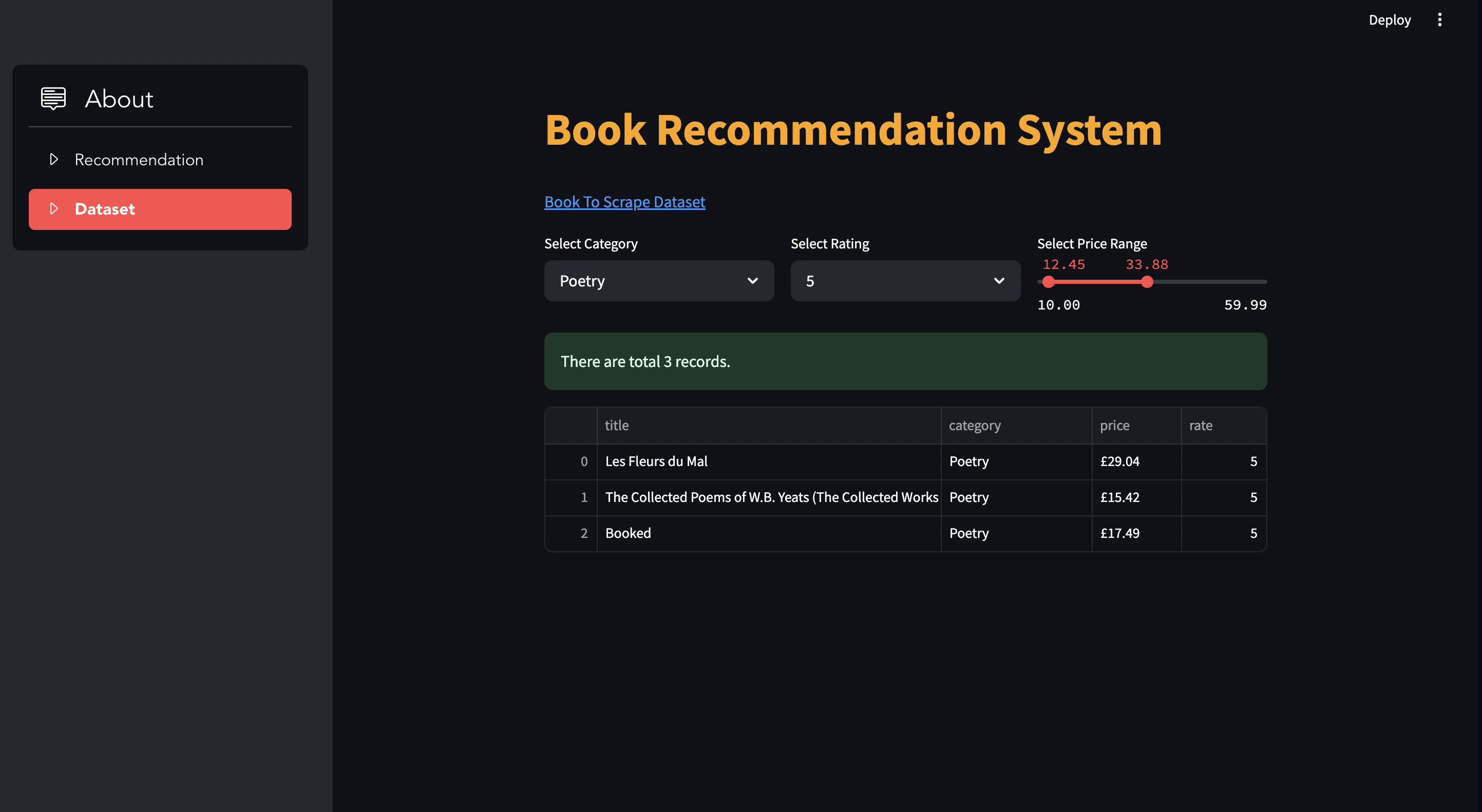
- Filter books by category, rating, and price range